Some business first: 2 weeks into the internet break now. Yesterday I did about 50 solves on a 3x3x3 cube. I think that speaks for itself. Also, I'm going on vacation and may or may not post on Friday, June 17th.
Anyways, the new cube.
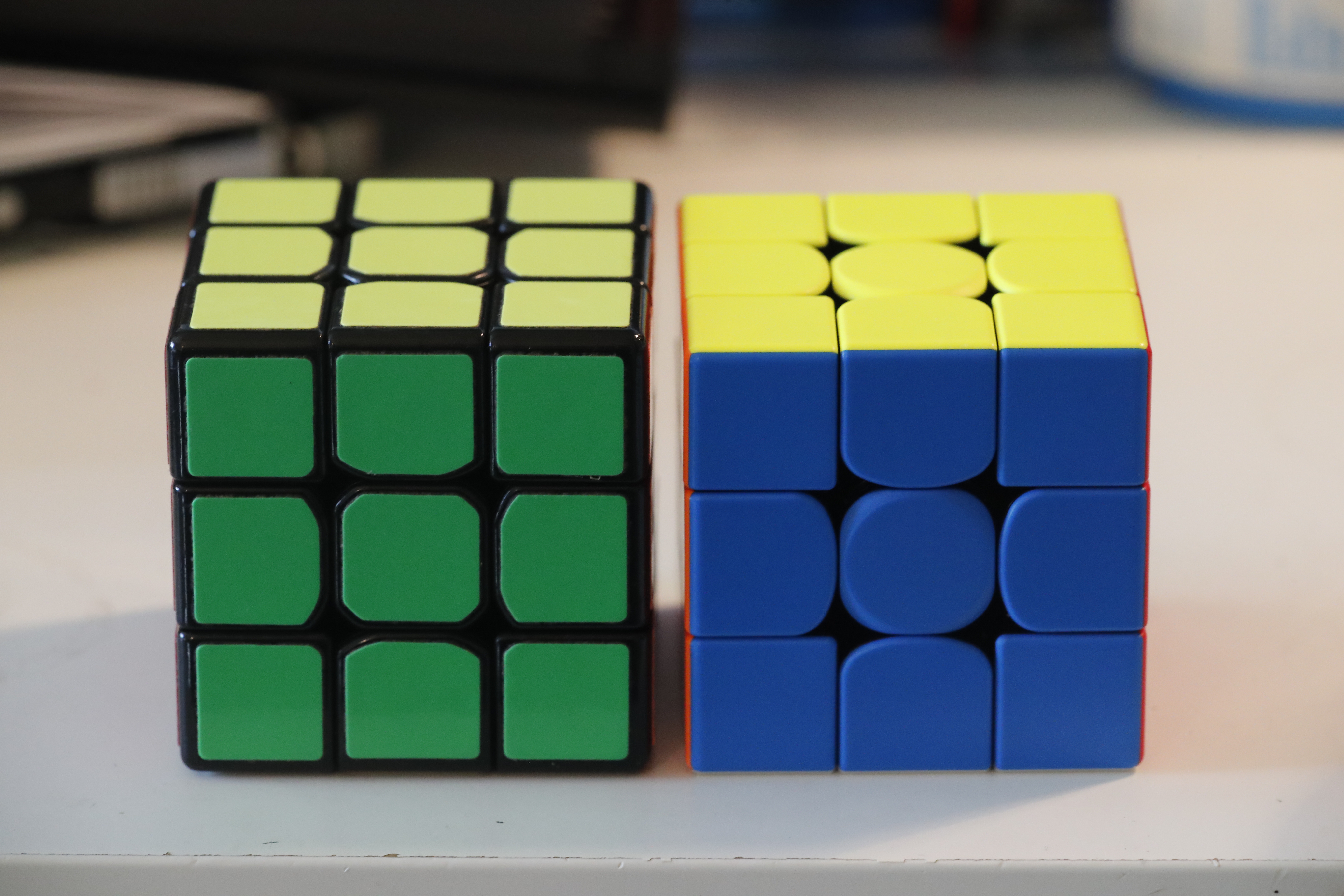
On the left is the speedcube I've used almost exclusively for the past 10 years. I believe it is a MoYu TangLong, which is a midrange cube from 2015, which must have been about when I got it. On the right is my new GAN V100, a midrange cube from 2026.
The differences are not subtle. One little detail about speedcubing that everyone in the community takes for granted but people who don't cube are occasionally surprised by is that puzzle design is not standardized and cubers are responsible for bringing their own puzzles to competitions. This means that you can have your main cube that's set up exactly how you like it, but it also means that there's a little bit of pay-to-win going on since a nicer cube will generally turn faster and more accurately.
It's not a huge barrier to entry or anything, though -- this new cube cost $40, but perfectly serviceable budget cubes can be had for about $10, and there's no reason I couldn't keep using the MoYu; reviews say it's a pretty good cube if you have it set up well, and the single solve world record was once set on a TangLong.
However, this particular cube is beat to hell and technology has, in fact, improved. The GAN cube is lighter, it turns effortlessly and snaps into place, and it's far less likely to "lock up", or end up in a situation where a face is misaligned in a way that prevents you from turning an adjacent face. One of the defining features of speedcubes is that they're designed to be able to "cut corners", or allow you to turn them when they're not perfectly lined up and have pieces snap into place to accomodate.
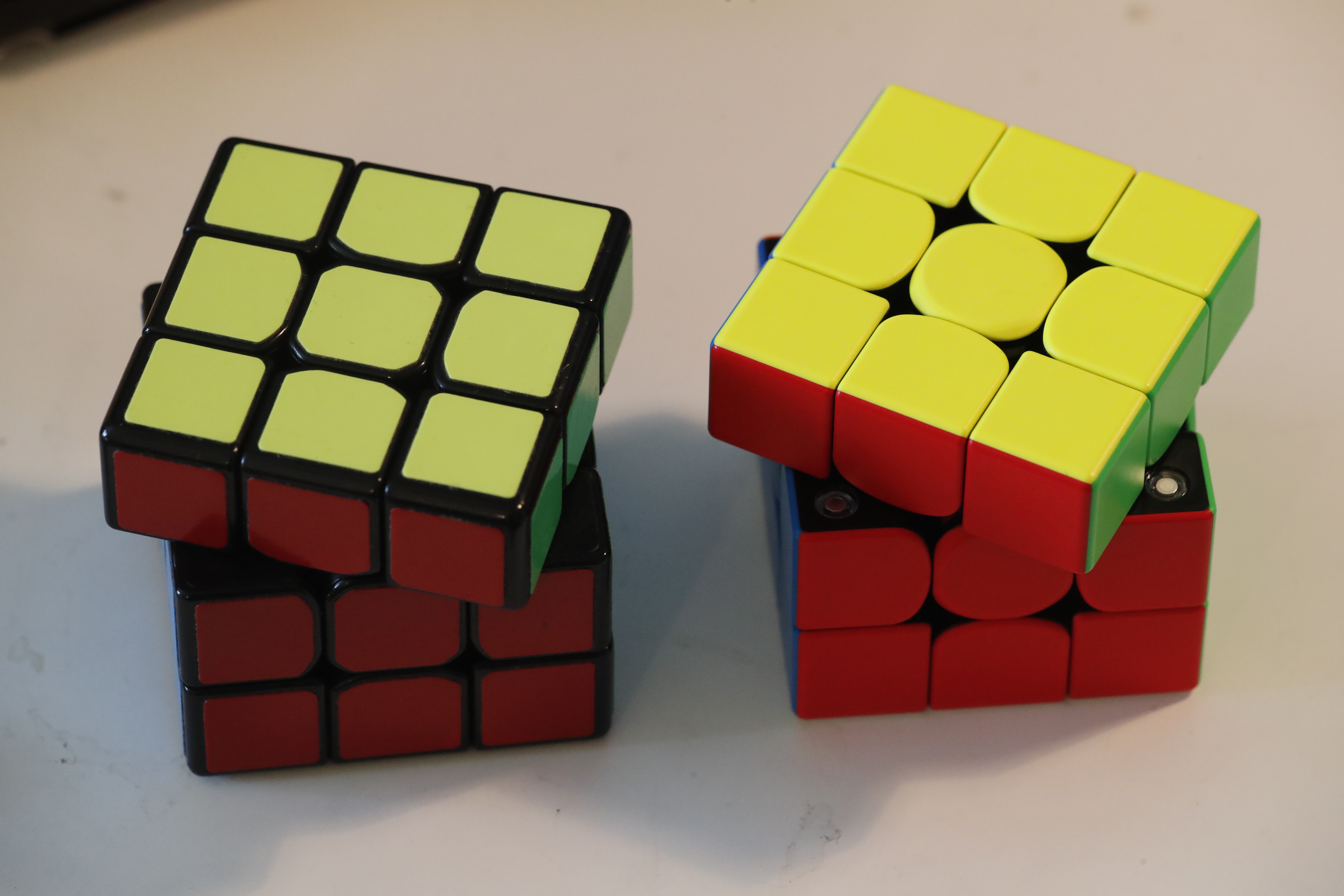
Here's a photo of both cubes at the point where they just start to lock up. It might look like a subtle difference, but at least for me it's the difference between a cube that locks up on me once or twice per solve versus... jeez, I don't know that I've ever had a lockup on the GAN and I've done at least a hundred solves on it since I got it. In this case, I'd be turning the green side towards me and the green-red-yellow corner would have to slip past the red center to make the turn possible.
Let's take 'em apart and see why.
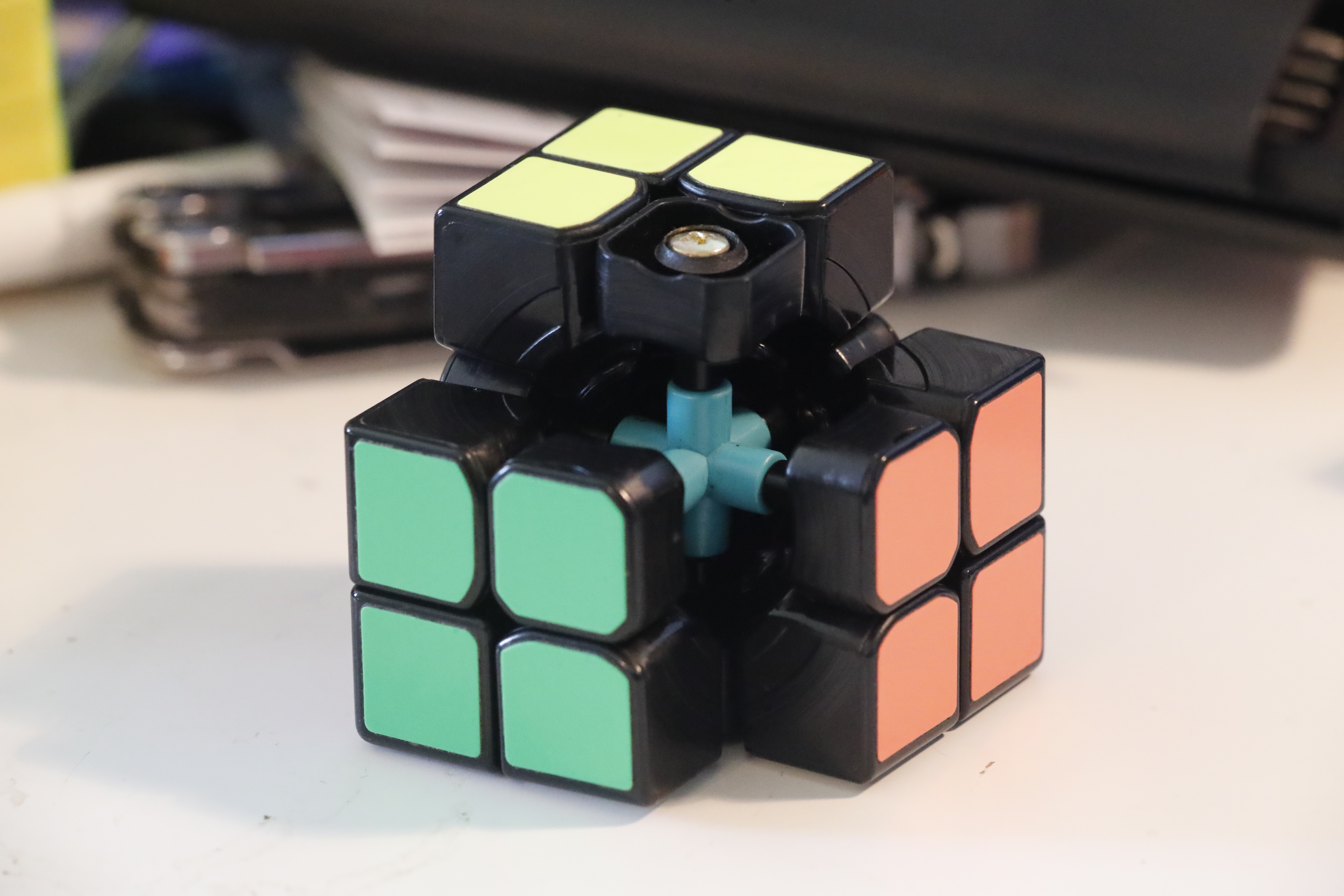
Here's the MoYu partially disassembled. (Speedcubes are made to come apart easily; it's normal to take a cube apart to clean and lubricate it every few hundred solves or so. The MoYu is suffering from this not having been done regularly.) This is a very common design for the time, where the core (blue piece, at center) is a simple cross piece that the centers screw into. The centers rotate around their screws, and are spring-loaded to push them into the core. Each center can move outwards by about a millimeter to allow for corner-cutting.
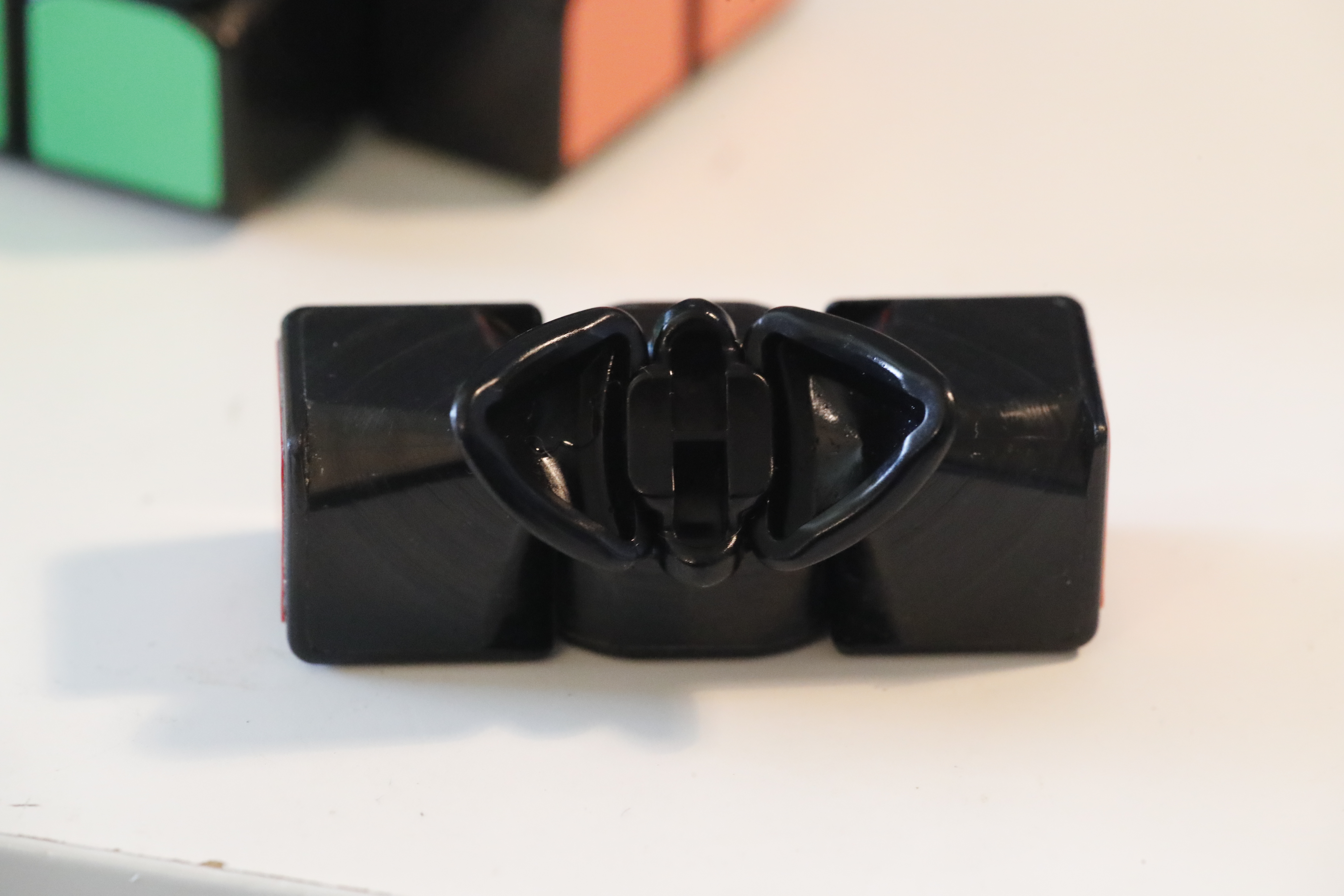
Looking at three pieces put together here, the contact surfaces have a fairly large area, both in the inner sliding parts (closer to camera) and the faces that contact between pieces. Generally speaking, more contact area means more friction and more difficult turns, especially if the cube is dry.
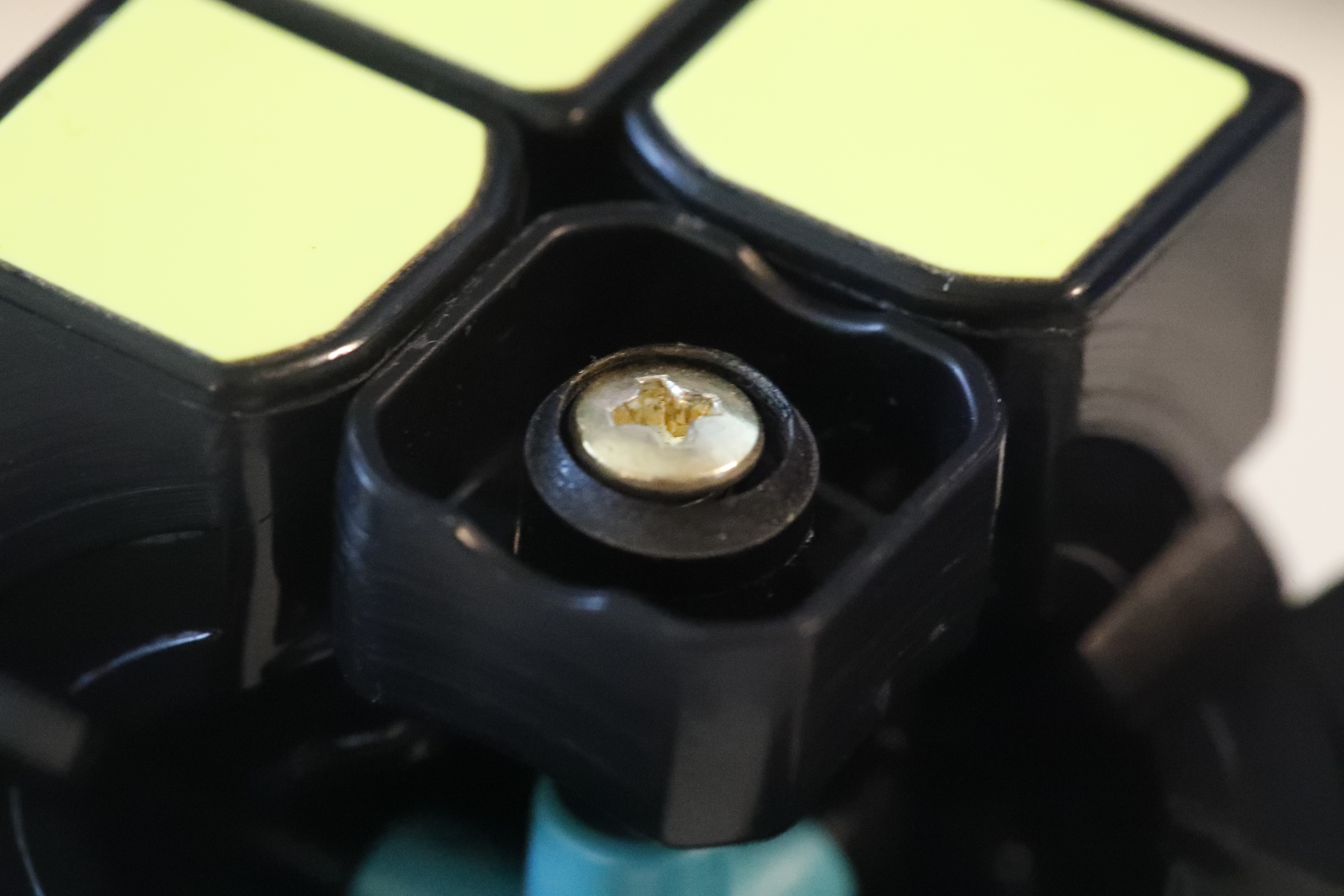
This center adjustment mechanism is also standard for the era. It's a single screw with a spring under it, and turning the screw adjusts the center travel (and tensions the spring slightly more or less), but large changes in spring tension require replacing the springs. Increasing spring tension makes the cube feel "tighter", harder to turn but less likely to turn on its own or further than intended, and increasing center travel makes corner cutting easier at the cost of making it more likely to jam or have corner pieces twist around the cube's diagonal (which makes the puzzle unsolveable until corrected).
These adjustments, incidentally, are largely a matter of user preference. I like a relatively low-tension cube that's also on the low side of the center travel range, which isn't really a thing that's possible to set up on the MoYu in the first place. I can either have it be too tight or too sloppy.
So let's look at the GAN in comparison.
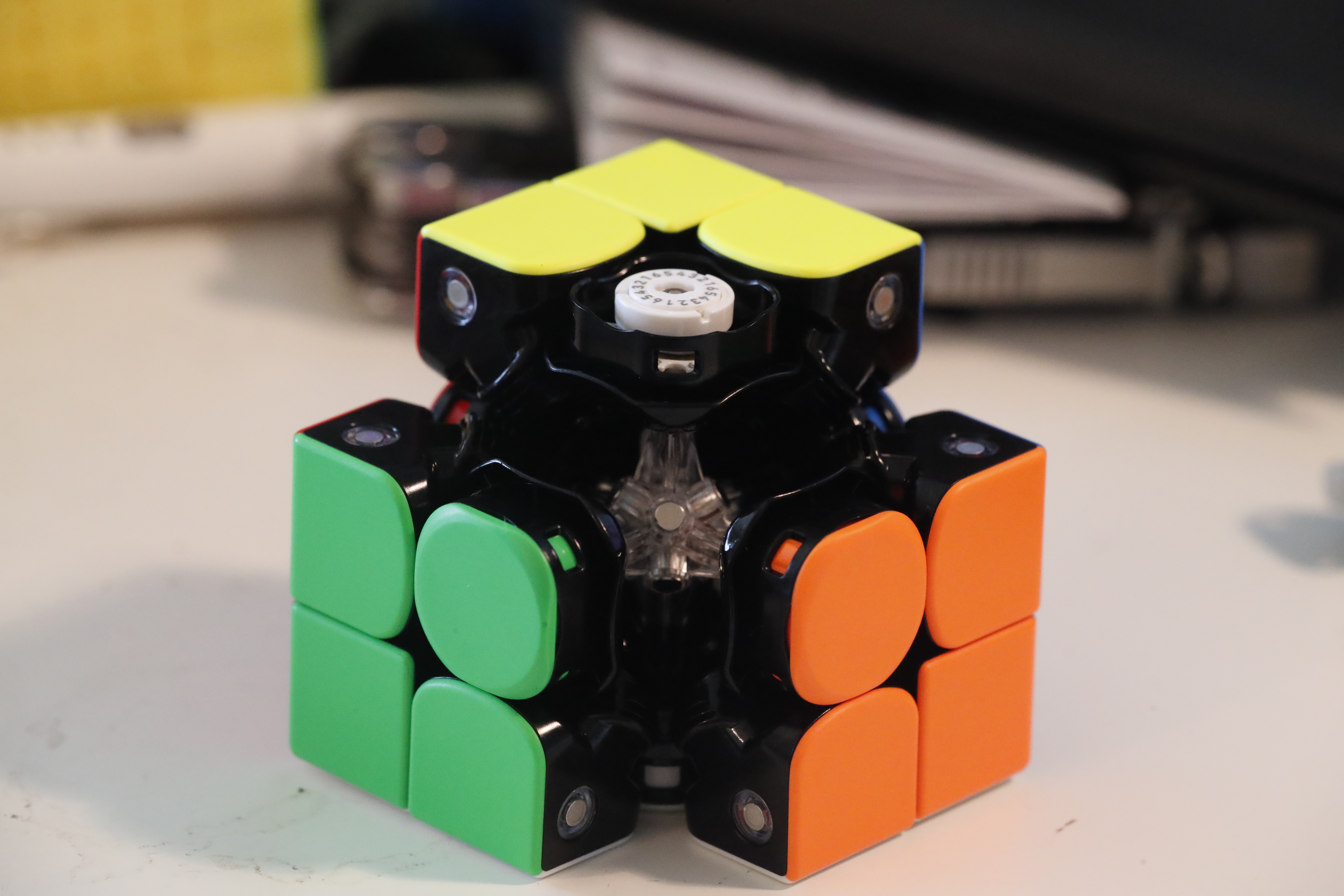
Obviously there's a lot more going on here. The core is a lot more substantial, there's some freaky crap going on with the center adjustment, and lots of the pieces have little magnets in them.
The little magnets are really important to how this cube feels. They let turns kinda snap into place (which makes it much harder to get the cube in a position where it's at risk of locking up at all), and they mean turns can be super light without making it uncontrollable. I'm pretty sure if the magnets weren't there I could flick the top face and have it spin a full 360 degrees around. Even with the magnets I can pretty consistently do half turns with one flick (though two quarter-turn flicks is faster).
It's not really possible to see, but the cube is also tensioned by opposing magnets rather than springs. This is fairly new technology in the cubing space, and I'm a huge fan -- every time I go back to the MoYu now the friction (and noise) of the springs moving around is obvious.
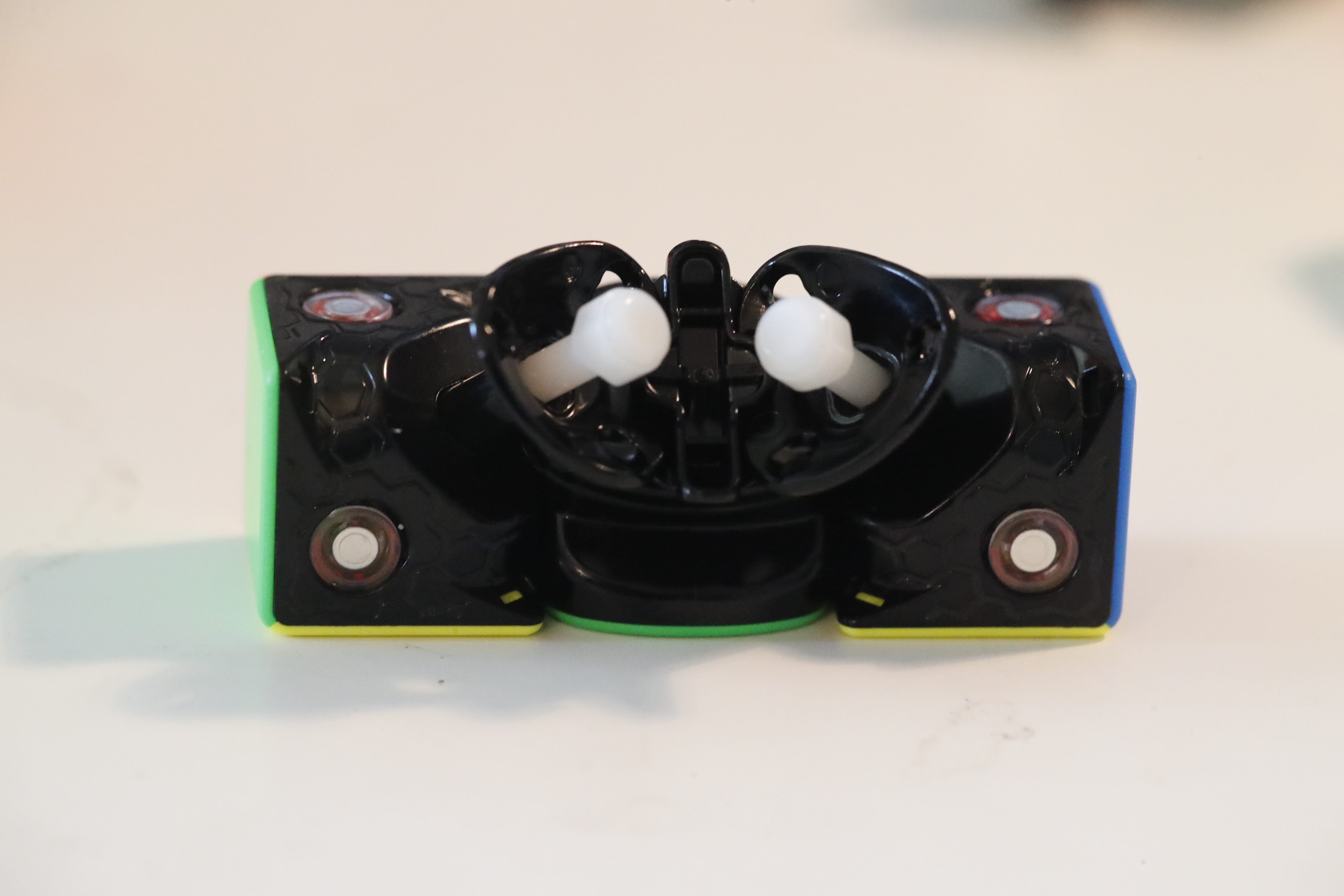
Looking at the same group of pieces, there's some texture on the contact patches between pieces, and the inner stuff is a lot thinner, so there's less friction all around. The white sticks coming out of the corners are more magnets for keeping the corners aligned to the core (and not just the neighboring edges).
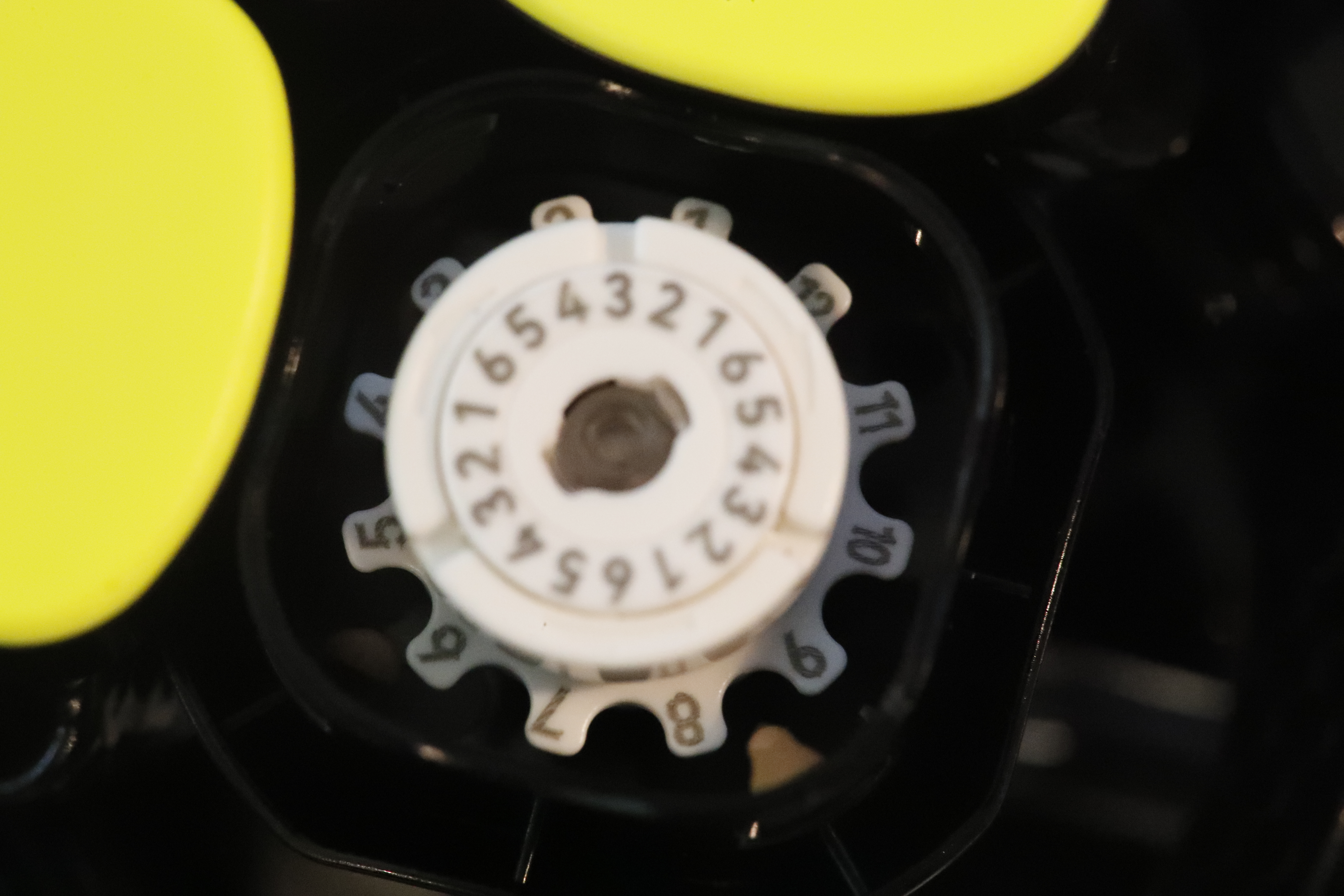
And here's the center adjustment. There are two separate adjustments here, where the inner ring adjusts center travel and the outer ring adjusts tension. They're also numbered with detents, so I can easily dial in adjustments on all six faces rather than having to do a fairly tedious process of tweaking and comparing. The cube even comes with this delightfully overengineered tool to pull a center cap off rather than having to just get my fingernails under it.
And there are a few other things beyond the mechanics. The GAN cube is much lighter (if you look closely, the pieces even have some lightweighting holes in them), it's quieter, and I like the texture of the pieces a lot better.
So what's the result? Well, I did an average of 12 solves on both cubes using the beginner method (which I'm more consistent at than Fridrich), and I got an average of 49.46 seconds on the GAN and 55.12 seconds on the MoYu (for comparison, my best Fridrich average of 12 is 43.79). I suspect that if I set the MoYu up better those numbers would get closer together, which I may experiment with in the future, but the important part to me is that the solves on the GAN were a lot more fun.
Because that's the real way this cube is going to make me a better solver: I like solving it more, so I'm going to do more practice.