There are actual problems with my car. In keeping with tradition, I'm going to ignore them and fix some random crap nobody except me cares about.
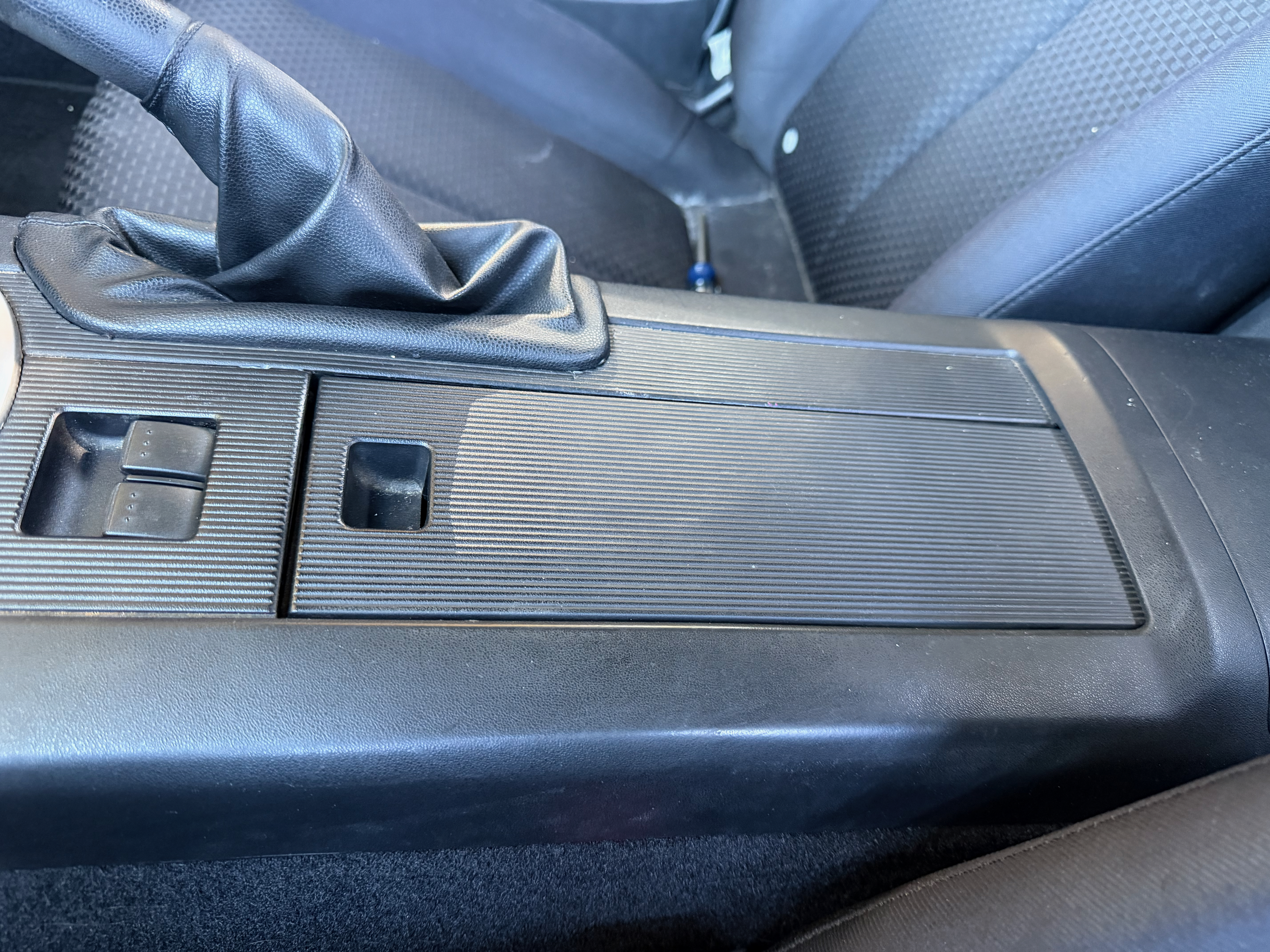
The Miata has this little sliding lid that covers the cupholders in the center console. If you're not using the cupholders, closing the lid makes it more comfortable to rest your arm there, which happens quite a lot considering that it's right behind the shifter.
It's supposed to latch closed, and for as long as I've had the car, the latch has been busted. This means that hard acceleration or braking will cause the lid to fly open or closed, which is annoying.
The whole console comes off pretty easily, so we should be able to get into the lid and figure out what's wrong. Actually, in this case the console didn't come off pretty easily because one of the connectors for the window switch was giving me a hard time. I remembered that there's a way to pull the window switch section out of the console to get easier access to the connectors, but then I goofed it up, did the wrong thing, and cracked the plastic housing that holds the switches in place. A new one is $150 for some reason. Off to a great start.
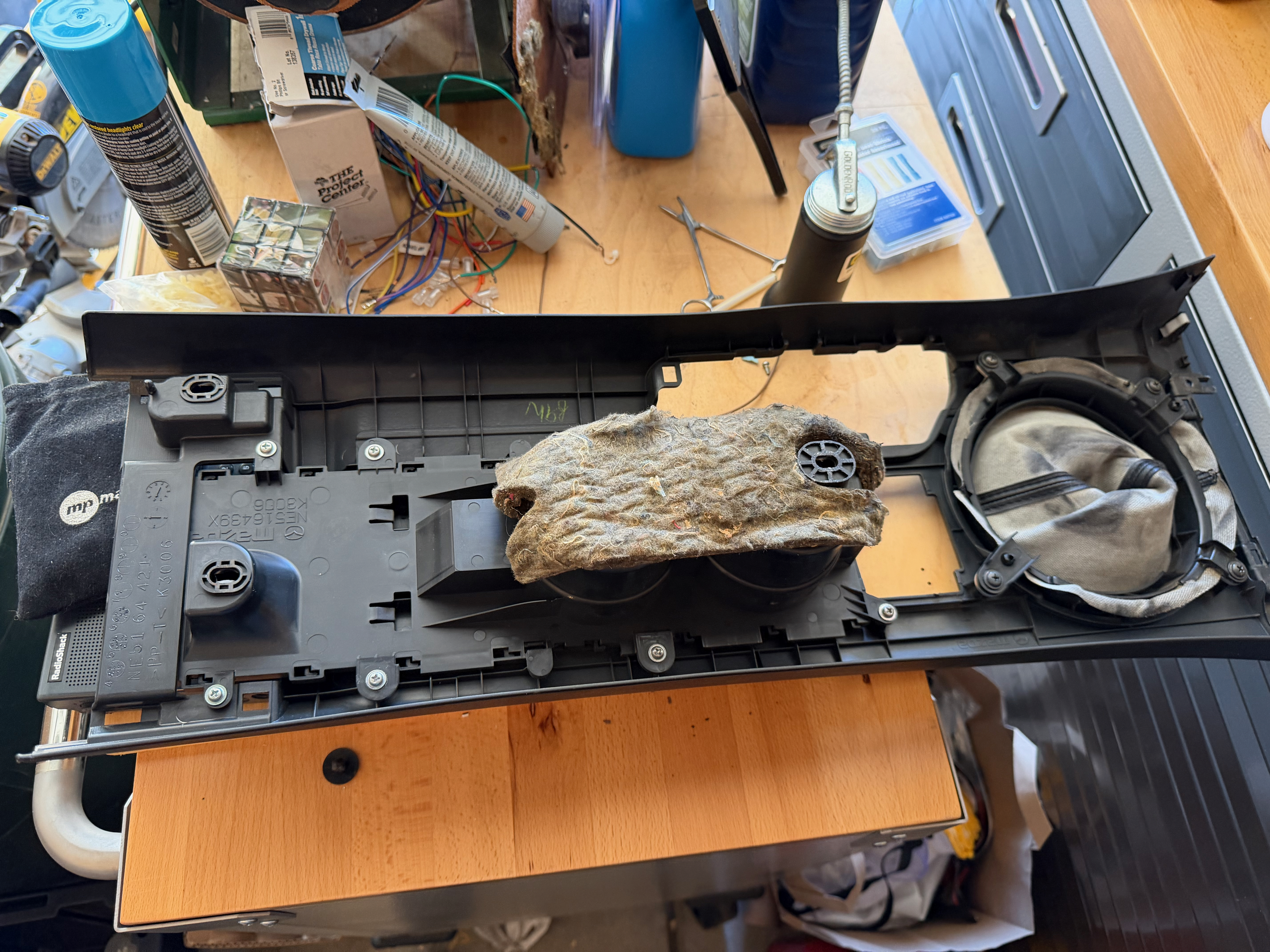
My excuse is that it was already kinda broken. With that nonsense out of the way, then, I could bring the console over to the workbench. The cupholders-and-lid section is its own piece that comes off with eight (!) screws, and then I have to actually get the lid out to access the catch.
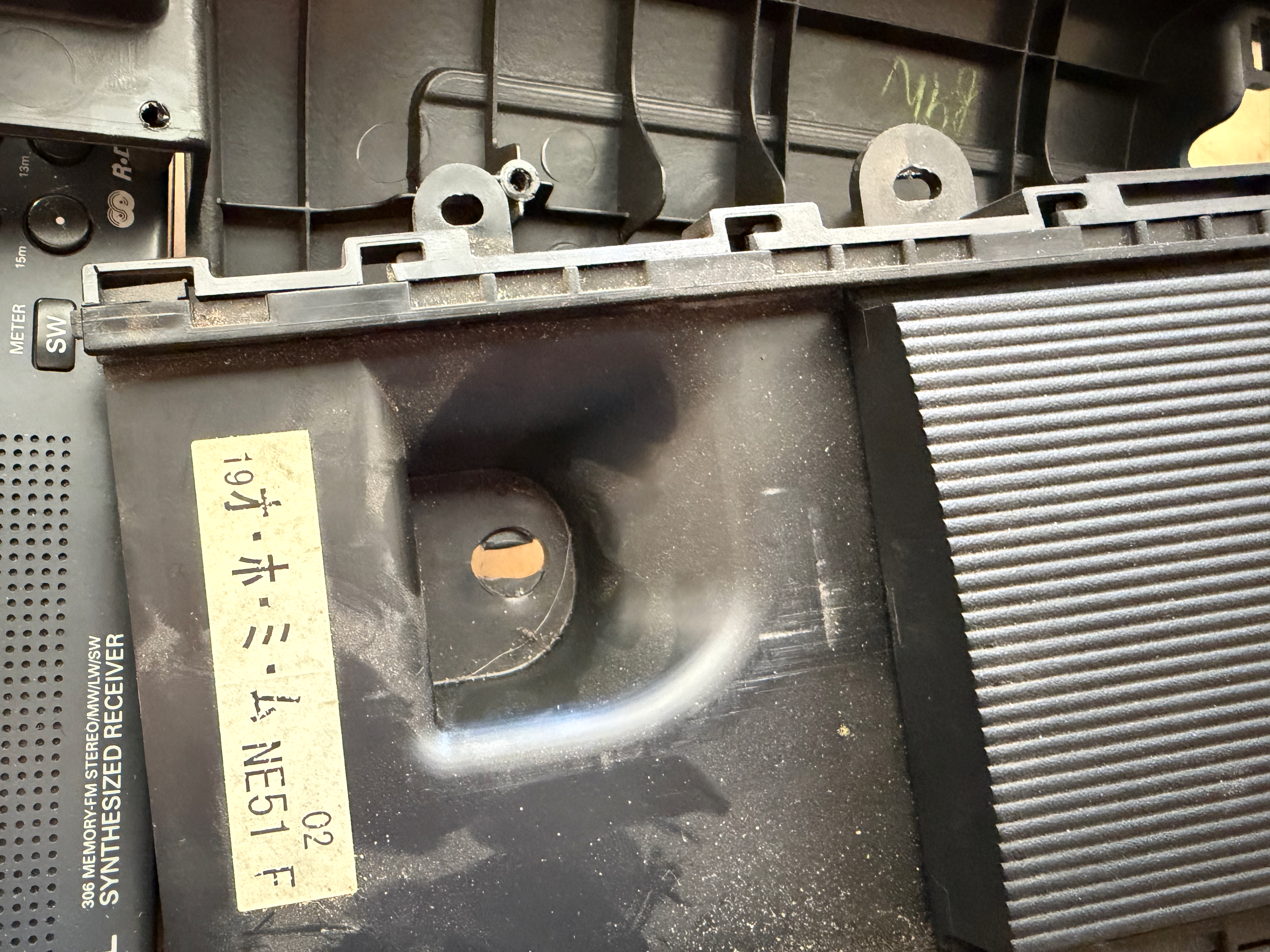
The lid can't just slide out, so I have to take the little guide rails out, which are their own pieces for some reason (I assume they're a different material from the rest of the assembly). Kind of an odd design for retention but it wasn't too difficult to deal with.
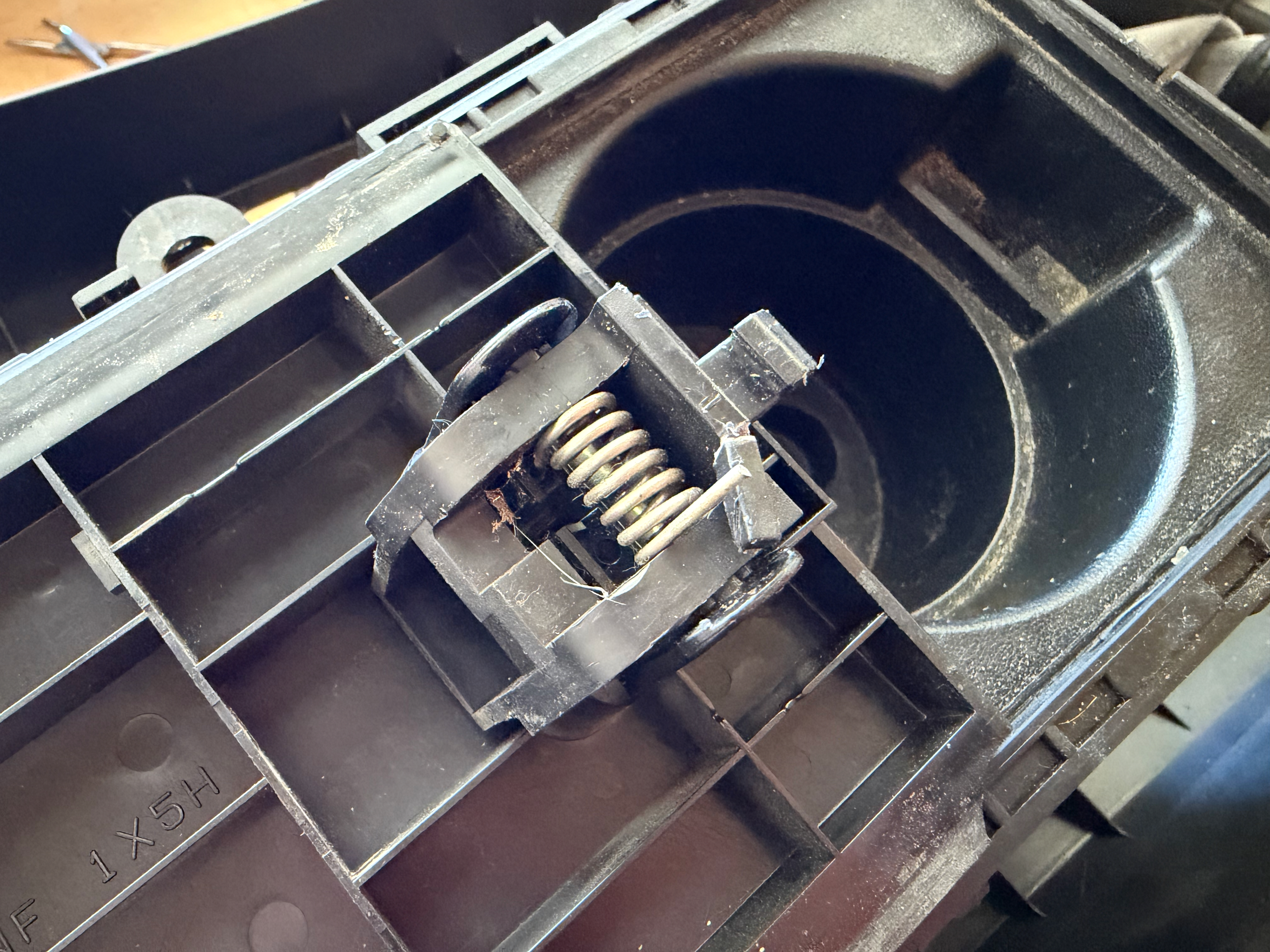
And finally we can see the problem. The big torsion spring there is supposed to have its end under the plastic of the catch, but it's broken, allowing the spring to pop up. I was actually a bit surprised to see this failure mode, I expected the spring itself to be broken; probably this is an artifact of being more used to working on stuff from 1950 that's made of steel than stuff from 2007 that's made of plastic. Works out nice for me, though, because now I don't have to figure out where to get a replacement spring.
It did take me a second to figure out what to do about it. Repairing the piece is probably not reasonable, since it's under a decent bit of stress from the spring and I don't have any method of bonding plastic that I trust to stand up to that force. I considered 3D printing a replacement for the entire catch, but that's a decent bit of CAD work and the geometry isn't super great for printing. I looked at the part some more and decided that all I really had to do was capture the end of that spring, something like a staple going over the end and bonded somehow to the remaining plastic would work, and then I realized that was entirely possible to do: I could just lock-wire it!
This is a technique I haven't used for anything in a while. Lock-wire is usually used to keep fasteners in place in high-reliability applications; the idea is that you use thin steel wire passed through a hole in a fastener head to secure it against rotation, and by simply twisting the ends of the wire together, you can make a surprisingly strong mechanical connection. We used to use it a lot in my high school robotics team, of all places (we had a couple old aviation guys around to borrow tools from, and it has advantages over giving teenagers free access to threadlocker). And, thankfully, it turns out the geometry here works great to just wire the end of the spring in place.
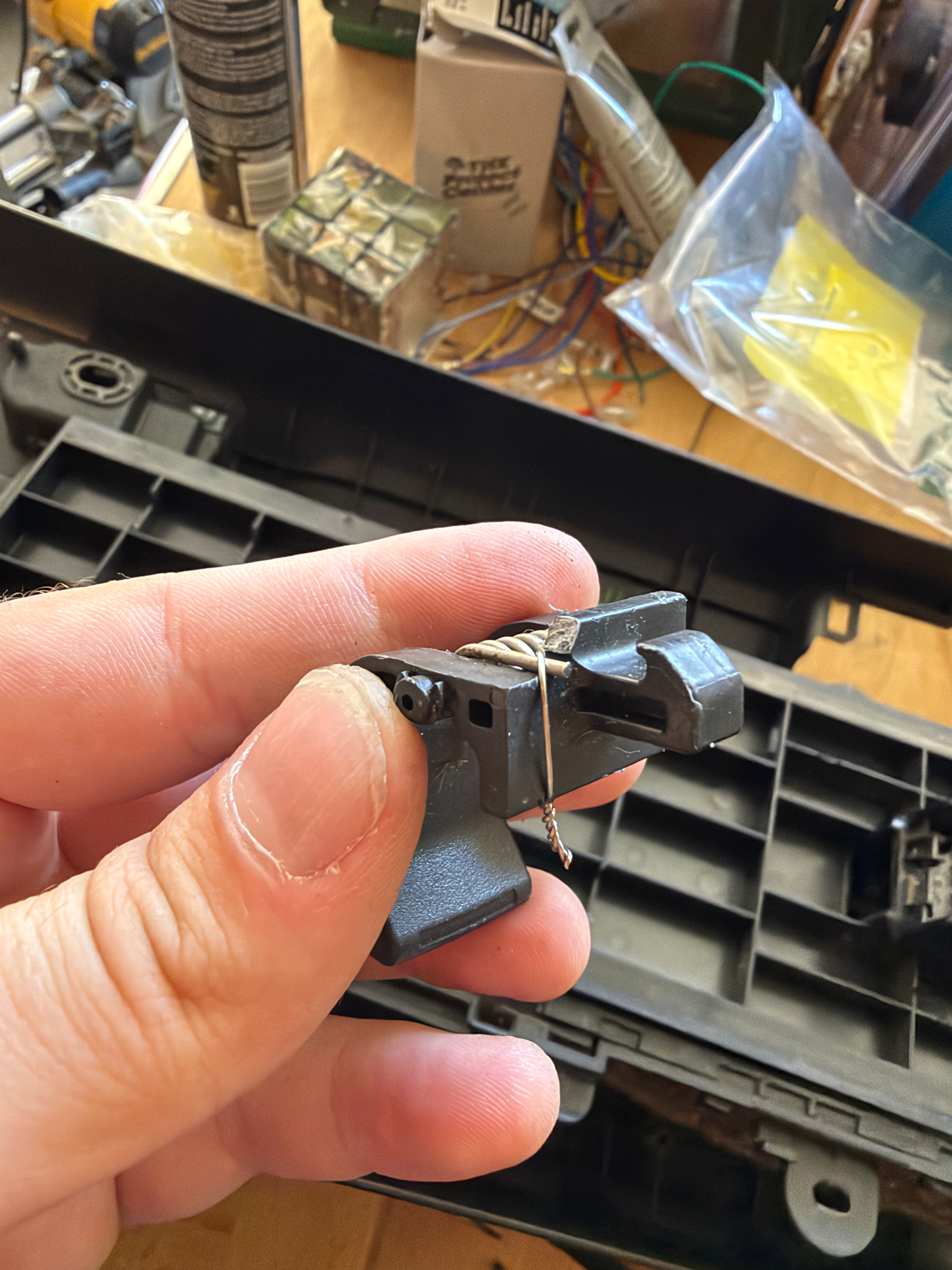
This isn't my best work; for one thing, this isn't lock wire (it's some spring wire I had laying around from a different thing; ideally I believe you'd use wire that's slightly more ductile) and I don't have the special pliers you use to twist it down so I had to use a pair of Vise-Grips instead. Still, for a low-stakes application like this, it should work fine.
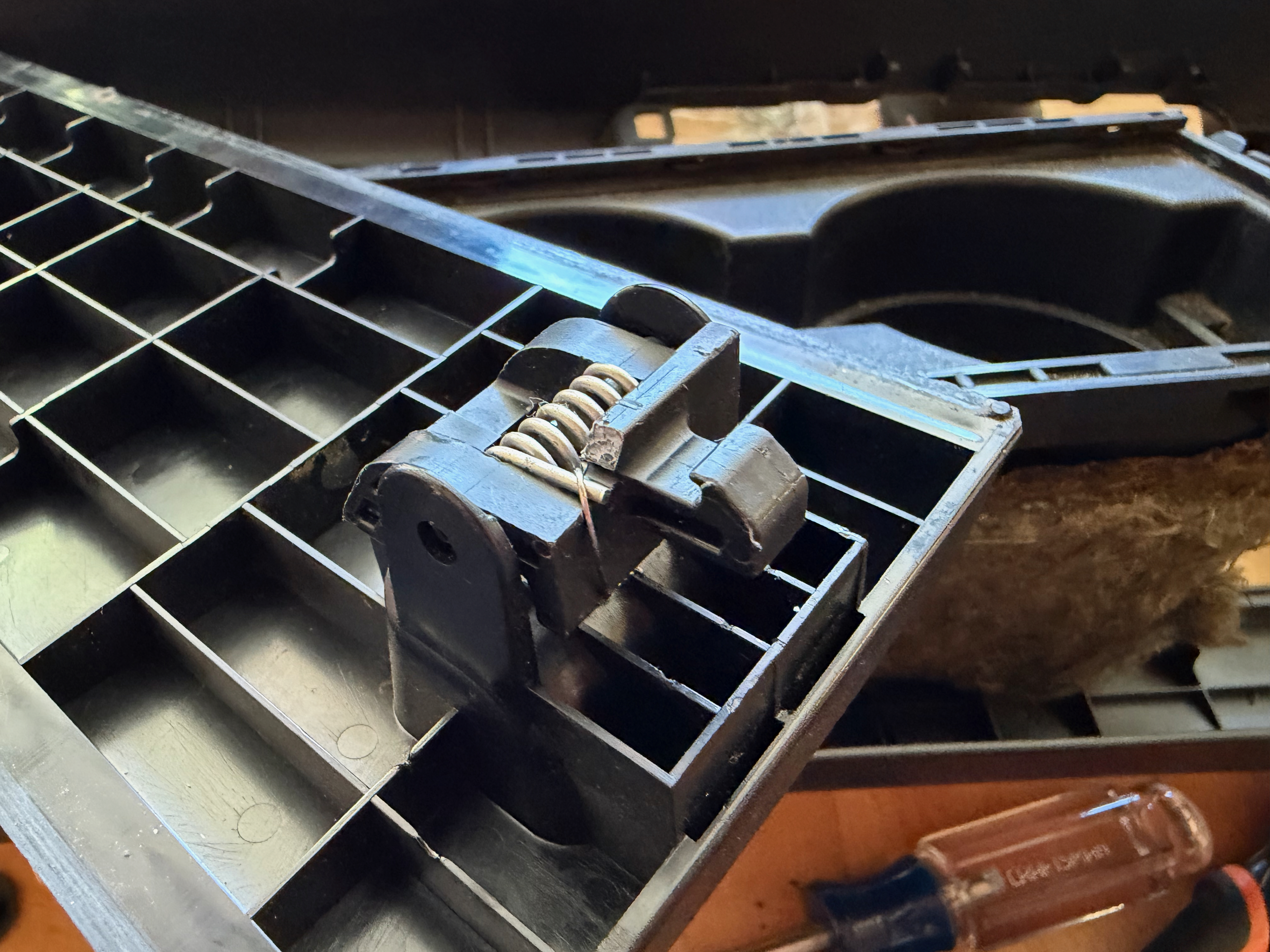
Reinstalling the catch in the lid was a little terrifying. I had to finagle it back in there and tension the spring at the same time, all while making sure I didn't put my fingers anywhere they might be injured if the wire failed. Thankfully, it all went fine.
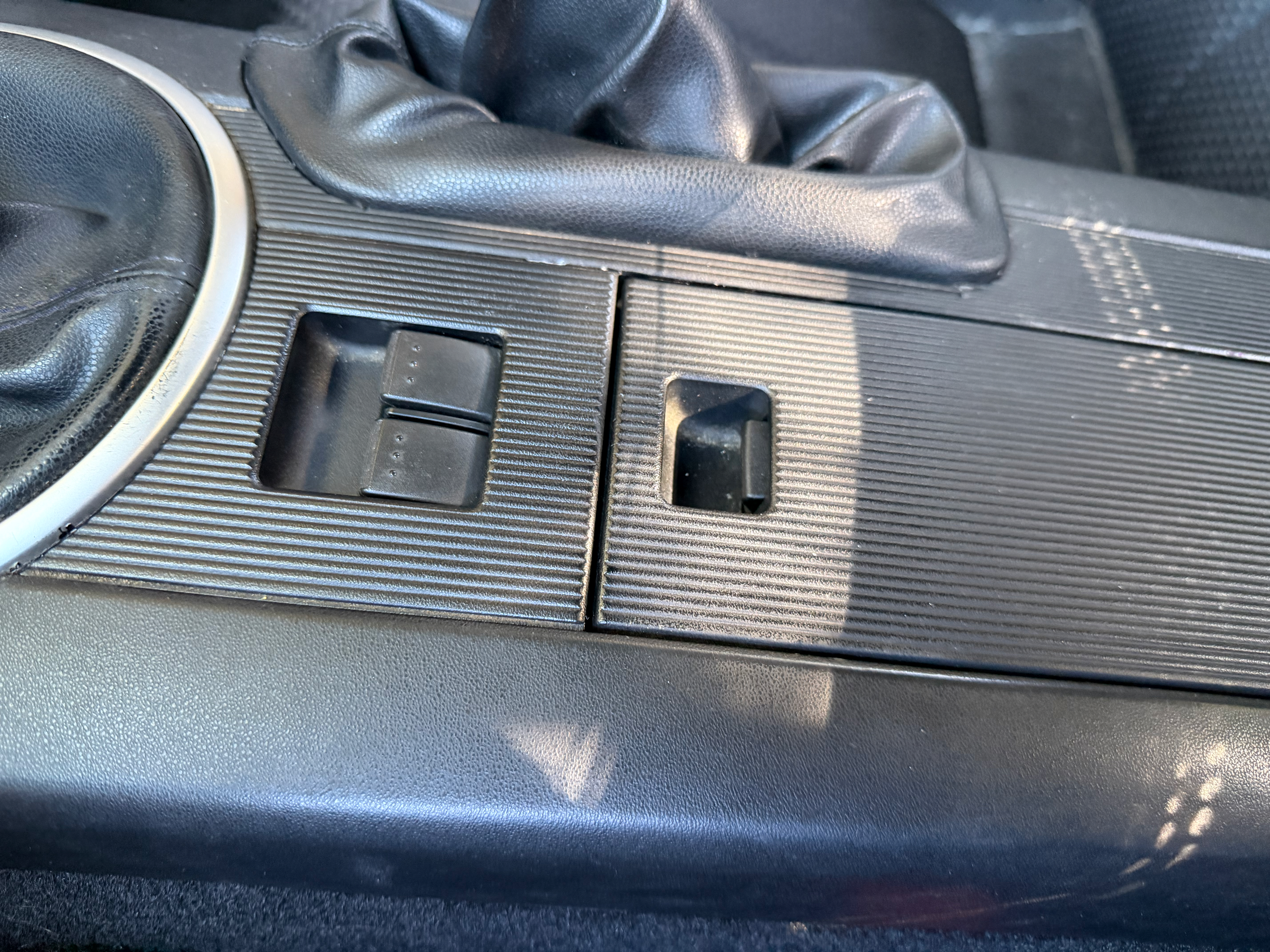
And now the cupholder lid latches again! I dunno, it's always nice to fix little stuff like this. It's one less thing to bother me when I'm out for a drive.